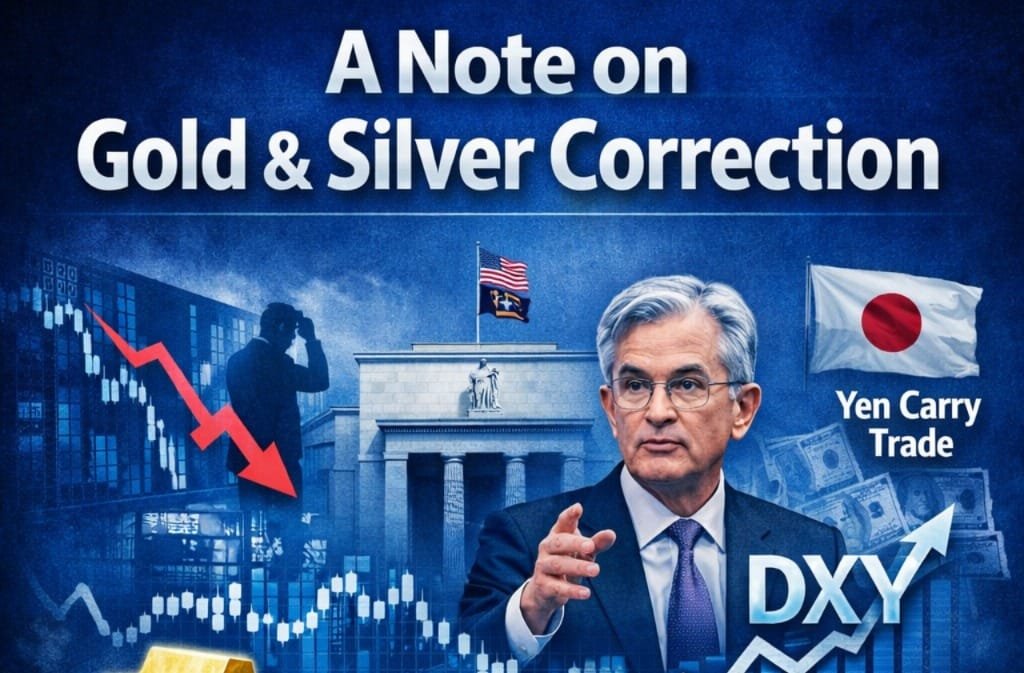
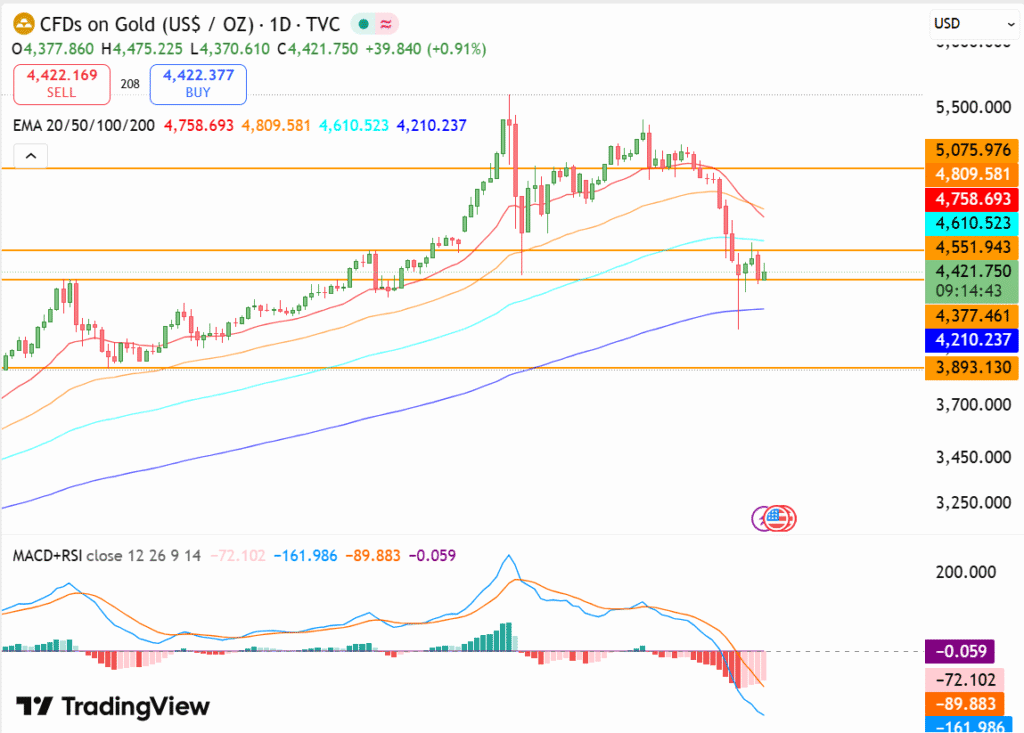
Over the past few weeks, gold and silver have witnessed a sharp correction despite elevated geopolitical tensions. This divergence between macro risk and price behavior is unusual at first glance—but not unprecedented.
The correction is being driven by short-term liquidity and macro forces, rather than any deterioration in the structural thesis for precious metals.
We have sent following note to all our clients last week, we are putting here for our audience to read.
Why are Precious Metal correcting?
a) Forced Liquidation Across Asset Classes
When markets correct broadly, investors tend to sell what is profitable, not what they dislike. Gold and silver, having outperformed in prior months, become sources of liquidity.
Margin calls in equities → selling of gold ETFs
Hedge funds reducing leverage → profit booking in metals
This is a classic “sell winners to cover losers” phase.
The US Federal Reserve has signaled a more cautious rate-cut trajectory, with expectations of only one cut in 2026.
Implications:
Higher real yields → negative for gold
Bonds become relatively more attractive
Opportunity cost of holding non-yielding assets rises
Historically, gold has an inverse correlation with real yields, and this relationship is playing out in the short term.
c) Strengthening US Dollar
The US Dollar Index (DXY) has crossed 100, while USD/INR has moved toward 94.
Why this matters is because
Gold is priced in USD → stronger dollar = weaker gold mechanically, Emerging markets (EM) currency depreciation reduces local demand and Global liquidity tightens
This is a purely mechanical pressure, not a structural shift.
Why the Long-Term Bull Case Remains Intact?
Despite short-term pressure, the structural drivers for gold and silver are strengthening:
a) Rising US Recession Probability
Yield curve signals remain fragile
Slowing growth expectations
Historically bullish for gold
b) AI-Driven Equity Market Excess
Concentrated rally in AI stocks
Valuation stretch reminiscent of past bubbles
Rotation into safe-haven assets likely
c) Japan Carry Trade Risk
Potential unwinding could trigger global liquidity tightening
Global institutions remain firmly bullish: JPMorgan Chase: Gold target ~$6,300 by end-2026 and Deutsche Bank: Gold target ~$6,000. Importantly, neither has revised targets downward, reinforcing that this is not a thesis break.
What Should Investors consider?
View 1 (Existing Investors): Stay invested. This is a liquidity-driven correction, not a fundamental reversal. Portfolio allocation to gold/silver continues to act as a hedge.
View 2 (New Investors): Avoid aggressive entry. Accumulate gradually near technical support zones rather than chasing volatility.
Final Take
This correction is best understood as a confluence of forced selling, higher real yields, and a stronger dollar—all short-term forces.
The underlying macro narrative—recession risk, inflation persistence, and financial system fragility—remains firmly supportive for gold and silver.
This is a shakeout, not a reversal. Stay the course.